
Argyle International Airport
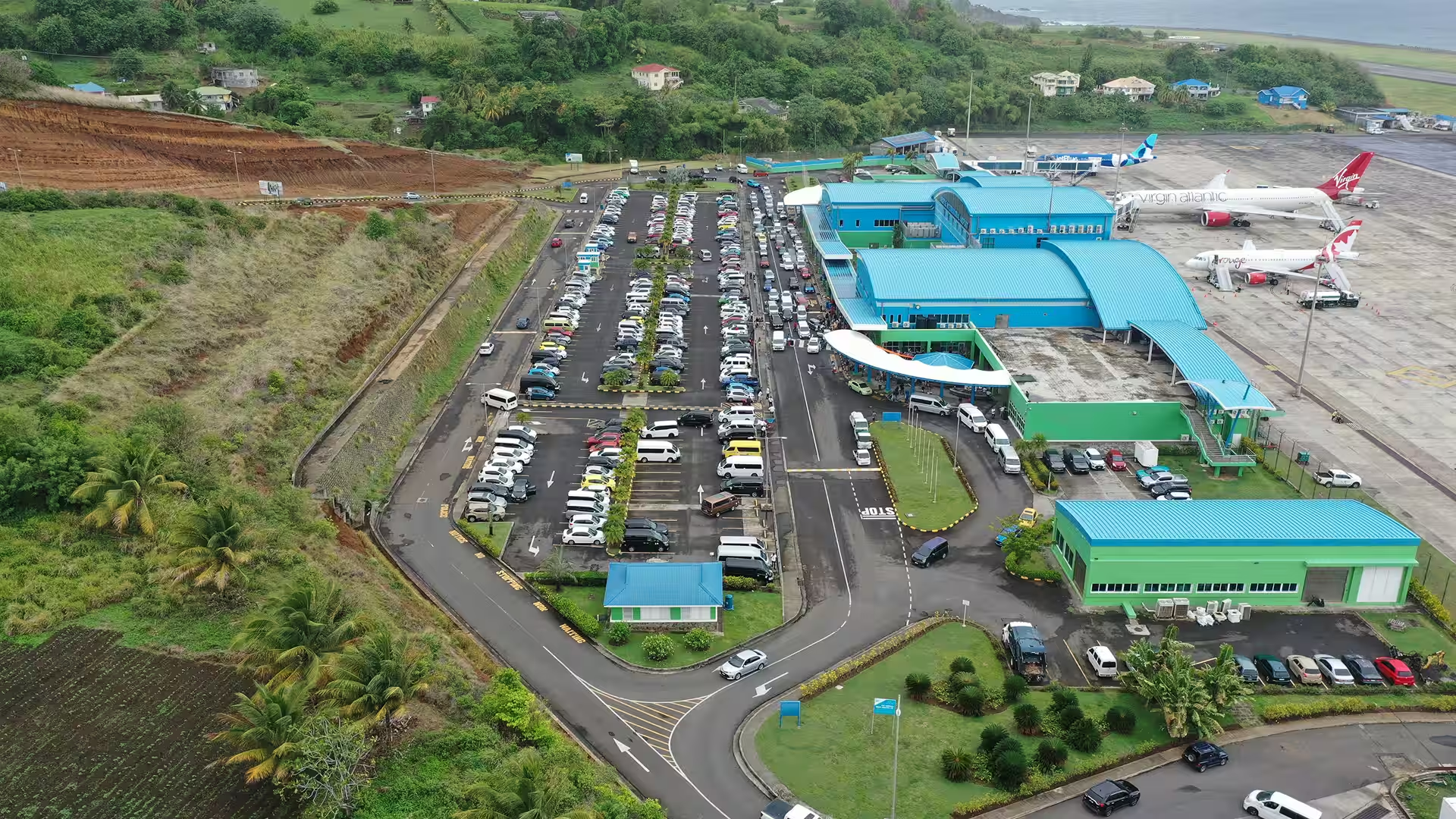
Where the chain begins
Argyle is the mainland gateway: the airport international traffic arrives into, and the point the three Grenadines airports connect back to.
Runways across the network
St. Vincent SVD
2,743m 9,000 ft
Canouan CIW
1,791m 5,880 ft
Bequia BQU
1,100m 3,610 ft
Union Island UNI
752m 2,470 ft
An airport cut out of the windward coast
For most of its history St. Vincent could only be reached by small aircraft routed through another island. The former E. T. Joshua Airport sat hemmed in near Kingstown with no room to grow, so every visitor from North America or Europe arrived on someone else’s connection.
Argyle changed that. Building it meant reshaping the land itself — levelling three hills and filling two valleys on the Atlantic side of the island to make a platform long enough for a 9,000-foot runway. It opened in February 2017 as the first airport in the country’s history able to receive wide-body, long-haul aircraft directly.
It is also among the first airports in the Caribbean to run part of its operation on solar power, and it is built to handle up to 1.5 million passengers a year.
How it was built
- 2005
Argyle chosen
After technical studies of possible mainland sites, government announced Argyle as the location for a new international airport.
- 2008
Ground broken
Earthworks began in August. Three hills were cut down and two valleys filled to carve a level platform out of the windward coast.
- 2017
Opened
The first aircraft landed on 14 February, giving the country its first runway able to take long-haul jets directly from North America and Europe.
Direct routes
| Destination | Region | Code |
|---|---|---|
| Miami | United States | MIA |
| New York | United States | JFK |
| Toronto | Canada | YYZ |
| London | United Kingdom | LHR |
| Barbados | Caribbean | BGI |











Two terminals, one roof
International terminal
- Glass jet bridges, elevators and escalators
- Wheelchair service and accessible washrooms
- 23 commercial spaces, three restaurants and kiosk positions
- Solar generation supporting part of the operation
Domestic terminal
- Grenadines services to Bequia, Canouan and Union Island
- VIP lounge
- Grab-and-go counter and an outside bar
- Apron sized from twin otters to large commercial jets
Rescue and firefighting
- ICAO aerodrome category
- 9
- Firefighters Four of them trained medics
- 33
- Oshkosh Striker appliances
- 3
Aerodrome data
| Item | Value |
|---|---|
| IATA / ICAO | SVD / TVSA |
| Runway | 04 / 22 · asphalt |
| Runway length | 2,743 m — 9,000 ft |
| Elevation | 41 m — 136 ft |
| Coordinates | 13°09′23″N 61°09′01″W |
| Opened | 14 February 2017 |
| Annual capacity | 1.5 million passengers |
| Aerodrome category | ICAO CAT 9 rescue & firefighting |